Document & Records
Document Storage and Compliance: HIPAA, FACTA, and Beyond
For most renters, document storage is a logistical question — where do I put 40 banker boxes I do not need this month. For regulated industries, the question is regulatory: which facilities meet the chain-of-custody, access-control, and destruction requirements that my profession demands? This article focuses on the second category, with practical guidance for matching facility capability to compliance requirement.
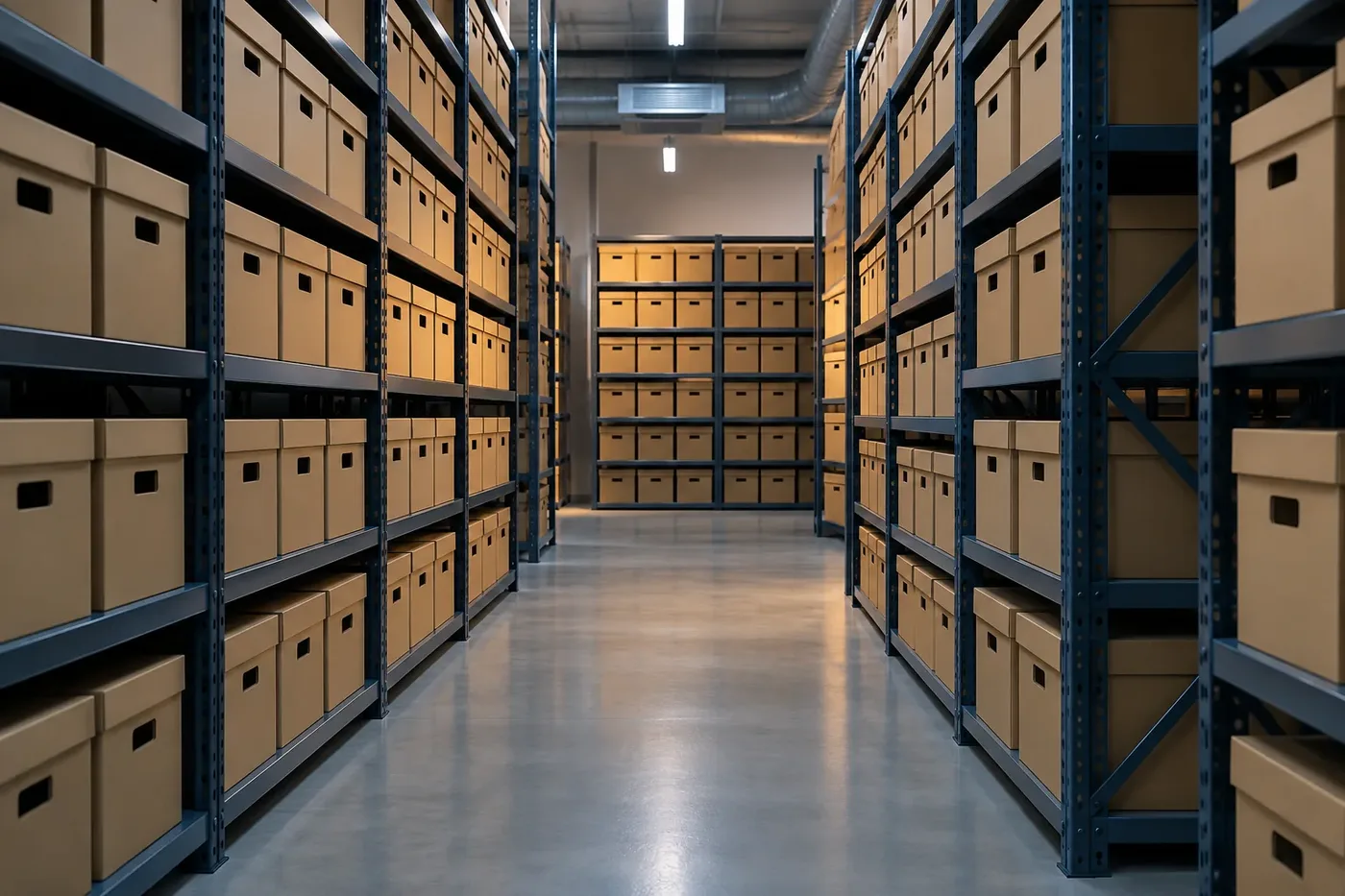
Why document storage is different
Records storage facilities differ from general self-storage in three ways. First, they index contents at the box or file level rather than the unit level, so you can request specific records on demand without driving to the facility. Second, they maintain audit-grade chain-of-custody documentation for every retrieval, transfer, and destruction event. Third, they are physically and procedurally hardened against fire, water, theft, and unauthorized access in ways that go beyond standard self-storage controls.
HIPAA-aware storage for healthcare
HIPAA does not certify storage facilities — there is no HIPAA stamp of approval. Instead, the regulation imposes obligations on covered entities that flow through to any business associate handling protected health information. A facility offering HIPAA-aware storage signs a Business Associate Agreement (BAA), implements physical and technical safeguards consistent with the Security Rule, and maintains documentation of access events. Verify the BAA is in writing and that the facility can articulate its safeguards in detail.
FACTA and financial records
FACTA — the Fair and Accurate Credit Transactions Act — imposes destruction requirements on consumer report information. The relevant standard for storage and destruction is reasonable measures to protect against unauthorized access. In practice, facilities serving financial advisors, accountants, and law firms with consumer file holdings should offer secure destruction (cross-cut shred or pulp) with certificates of destruction for each batch.
Legal records and litigation hold
Law firms have additional considerations. Files under litigation hold cannot be destroyed regardless of the firm's standard retention policy, and the storage facility needs procedures to honor a hold flag at the box or file level. Verify the facility's indexing system supports per-box hold tagging and that destruction workflows include a hold-check step.
Physical and procedural controls
- Fire suppression: VESDA early-warning detection and clean-agent (FM-200, Novec) suppression for sensitive collections; pre-action sprinkler systems for general records.
- Access control: layered authentication (badge plus PIN), with logged entry and exit per-person and per-zone.
- Camera coverage: continuous recording with 60-90 day retention, covering all entry points and aisles.
- Climate: 65-75°F, 35-50% RH, with monitoring logs available on demand.
- Pest control: scheduled professional treatment with documentation.
- Background checks: facility staff with access to records areas should pass background screening commensurate with the sensitivity of stored content.
Indexing and retrieval
For high-volume records storage, the indexing system matters as much as the physical conditions. Look for a facility that supports box-level barcoding, file-level metadata when needed, online inventory access, and SLA-backed retrieval (typically same-day or next-day for standard requests, with rush options for litigation needs). Pickup and delivery service with a chain-of-custody signature on each transit is standard for serious operations.
Destruction and end-of-life
Every stored record reaches end of life. Verify the facility offers NAID-certified destruction (or equivalent), provides certificates of destruction for each batch, and maintains the destruction log for audit. For regulated industries, the destruction certificate is part of your compliance record and should be retained per your records retention policy.
When to consider digital alternatives
For many firms, the long-term answer is digitization with limited physical retention. A scanning project with proper indexing converts the storage problem from physical to digital, and the resulting digital archive is searchable and replicable. Many records storage operations now offer scanning as a service, often combined with secure destruction of the originals once the digital copy is verified.
Find the right facility
Ready to put this guide to work? Browse storage by category or find facilities in your state.