Fine Art
Fine Art Storage at Museum Grade — Without Museum Pricing
Storing art well is harder than storing wine well. Wine has a stable target — 55°F, 60-70% RH, dark, still — and the failure modes are well understood. Art varies enormously by medium, age, and condition, and the right environment for an oil on canvas from 1920 differs from the right environment for a contemporary acrylic on board, which differs again from a sculpture in cast bronze. Museum-grade storage is the discipline of managing these variables across a mixed collection without compromise.
The museum spec
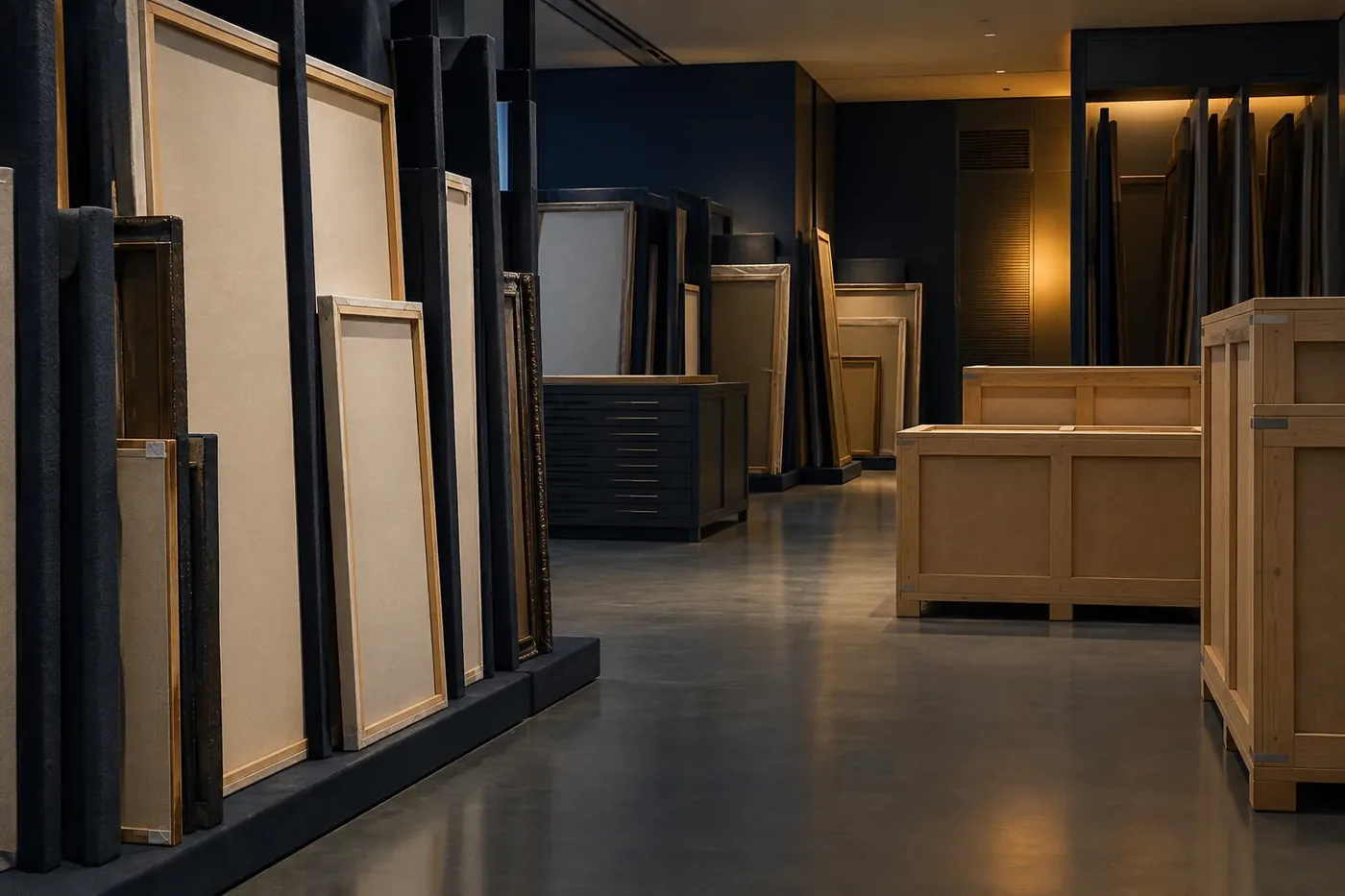
The conventional museum target is 70°F (plus or minus 2°F) at 50% RH (plus or minus 5%). Lighting in storage is minimal and indirect, with UV filtered. Air handling is HEPA-filtered to remove particulates, and the room is monitored continuously for temperature, humidity, light exposure, and intrusion. The storage furniture itself — racks, shelves, bins — is built from inert materials that do not off-gas. This is the standard, and a serious art storage operation will meet it.
Crating and packing
Most damage to stored art occurs in transit, not in storage. Proper crating uses custom-built cases with archival foam, vapor barriers, and shock-absorbing isolation. For paintings, a slip case followed by a travel frame followed by an outer crate is standard for high-value transport. For sculpture, the crate cradles the piece at structural points, never at decorative or fragile elements.
Reputable art storage operations include packing services or partner with credentialed art handlers. If your facility outsources packing, verify the handler's credentials and insurance.
Climate sensitivity by medium
- Oil on canvas: stable; tolerates standard museum spec well.
- Acrylic on canvas: more sensitive to temperature swings; can soften and accept impressions from packing materials in heat.
- Watercolor and ink on paper: highly sensitive to humidity (mold) and light (fading). Run on the dry end of the spec.
- Photographs: low temperature and low humidity prolong life; specialty photo archives run cooler than standard spec.
- Wood panels and frames: sensitive to humidity swings, which crack panels and split joints.
- Bronze sculpture: stable but sensitive to chloride exposure (think fingerprints from un-gloved handling).
- Mixed media and contemporary: varies wildly. When in doubt, run on the conservative end and consult a conservator.
Viewing rooms and access
Serious art storage offers a clean, well-lit viewing room where you can examine pieces without fully unpacking and re-crating. This matters for collectors who actively trade or loan pieces, and it is a meaningful differentiator between general specialty storage and true art storage. Viewing rooms are typically scheduled by appointment and may include a handler to assist with bringing pieces from storage.
Insurance and provenance
Art insurance is its own discipline. Most homeowner policies cap collectibles coverage at modest limits, and a separate fine arts policy is standard for collections beyond a few thousand dollars in value. Insurance providers typically require condition reports for each piece, and reputable storage operations will issue or facilitate condition reports as part of intake. Maintain digital copies of provenance documentation, condition reports, and insurance schedules — separate from the physical pieces.
Choosing a facility
When you tour a prospective art storage facility, look for: dedicated climate zones with their own HVAC; continuous monitoring with renter-accessible logs; viewing room available; on-staff or partnered art handlers; written intake protocol including condition reporting; layered access control with logging; clean, organized racks with archival materials; and a written security and emergency plan you can review. The cost premium for true art storage is real — typically 2-3x standard climate-controlled rates per cubic foot — but for a serious collection, the alternative is risk that no insurance fully covers.
Find the right facility
Ready to put this guide to work? Browse storage by category or find facilities in your state.