Pharmaceutical
Pharmaceutical Cold-Chain Storage: Validation, Monitoring, and Why Specialty Operators Win
Pharmaceutical storage is the most regulated category in self-storage, and the gap between general specialty operators and true cold-chain operators is wide. For clinical trial supply, regulated samples, vaccine reserves, and high-value supplement inventory, the choice of storage facility is a regulatory decision, not a logistical one.
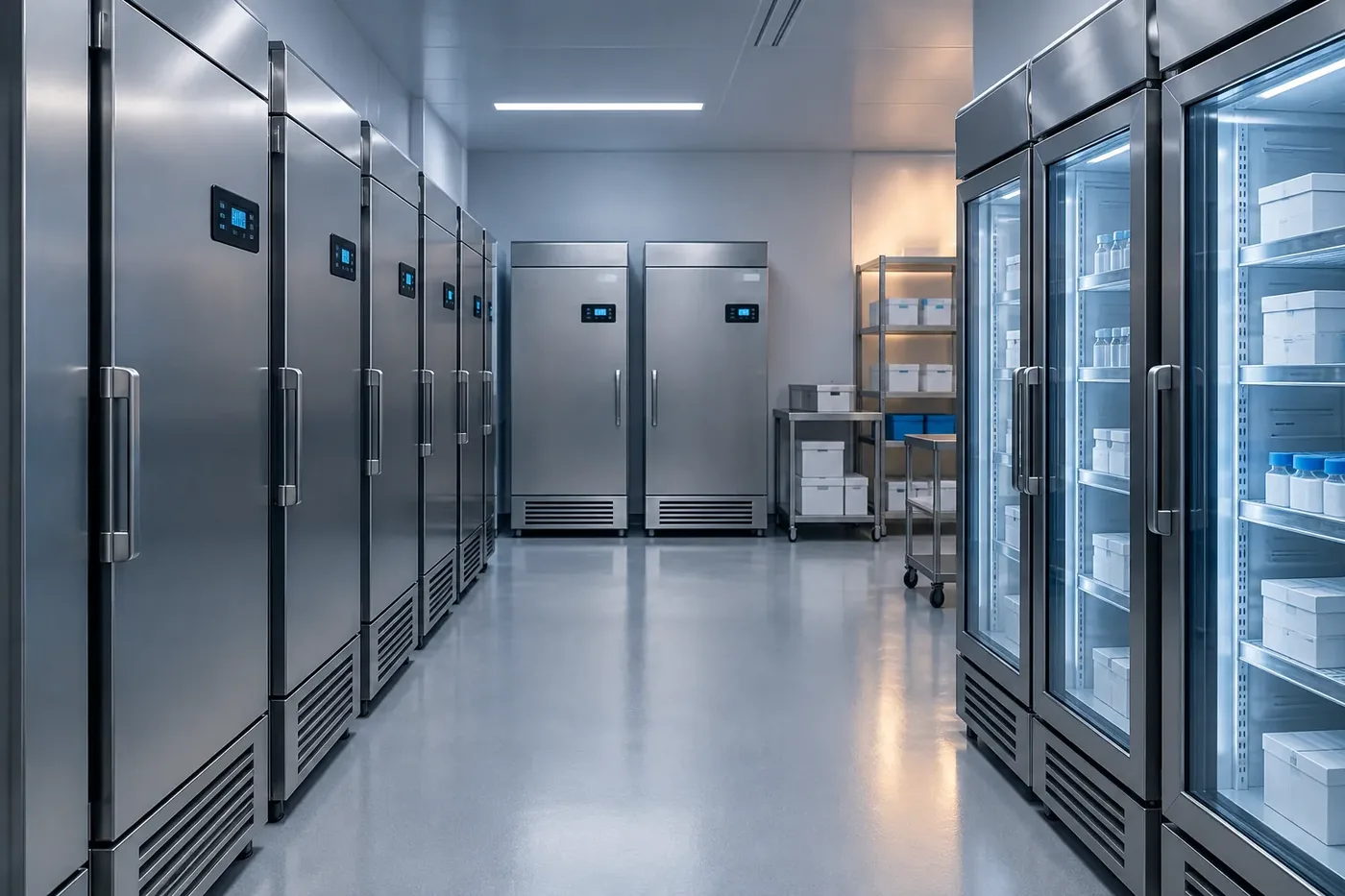
What cold-chain means
Cold-chain storage maintains temperature within a defined range (typically 2-8°C for refrigerated, -20°C for freezer, -80°C for ultra-low) continuously, with continuous monitoring and documented response procedures for any out-of-range excursion. The full discipline includes equipment validation, monitoring system calibration, written SOPs, staff training, and documented quality assurance audits. A facility that meets the spec can show you all of it.
Validation
Storage equipment for pharmaceutical use is validated through Installation Qualification (IQ), Operational Qualification (OQ), and Performance Qualification (PQ). Validation establishes that the equipment performs as specified across a representative load and across a defined operating envelope. For renters, the practical question is whether the facility has IQ/OQ/PQ documentation for the specific units they offer to you, and whether they perform requalification on a defined schedule.
Continuous monitoring
Validated storage requires continuous temperature monitoring with calibrated sensors, automated alerting on excursions, and a documented response protocol. Best-in-class operations use independent monitoring systems (separate from the unit's internal thermostat) with cellular or wired alerting that does not depend on local power. Look for monitoring intervals of 5 minutes or finer, with on-call staff available to respond to alerts within defined time windows.
Excursion handling
Even excellent operations occasionally see excursions — a unit door left ajar, a power blip, a refrigeration cycle failure. The discipline question is what happens next. The right answer is: alert the on-call team, capture the duration and magnitude of the excursion, notify the affected renters, and document everything for the audit record. Bad operations notice the excursion days later. Good operations notice in real time and have notified you before you would have noticed yourself.
Power redundancy
Cold-chain facilities require backup power — typically a diesel generator with weekly test runs and a fuel contract for extended outages. Some operations also run UPS systems for the brief gap between utility power loss and generator startup. Verify the backup power model, the test schedule, and the maximum runtime on stored fuel.
Documentation and audit
- IQ/OQ/PQ for each storage unit you use.
- Calibration certificates for monitoring sensors, current within the calibration interval.
- Excursion log with documented response.
- Staff training records.
- Standard Operating Procedures (SOPs) for intake, storage, retrieval, and destruction.
- Audit trail for access events.
When you need this
Clinical trial sponsors, regulated drug manufacturers, biotech startups with samples or reagents, hospital systems with vaccine reserves, and high-value supplement brands all benefit from validated cold-chain storage. The annual cost premium versus generic refrigerated storage is significant — often 2-4x — but the regulatory exposure of a non-validated environment is far larger than the storage premium.
Find the right facility
Ready to put this guide to work? Browse storage by category or find facilities in your state.