Wine
Wine Storage Fundamentals: What 55°F Actually Means
Anyone who has spent serious money on Burgundy, vintage Champagne, or aging-track Bordeaux already knows that wine storage is a long-horizon decision. A bottle that is going to mature for fifteen years is going to spend roughly 5,500 days in the dark, and any one of those days can compromise the bottle if the storage environment fails. That is the case for cellar-grade storage in a phrase: you are buying conditions, not square footage.
The four variables
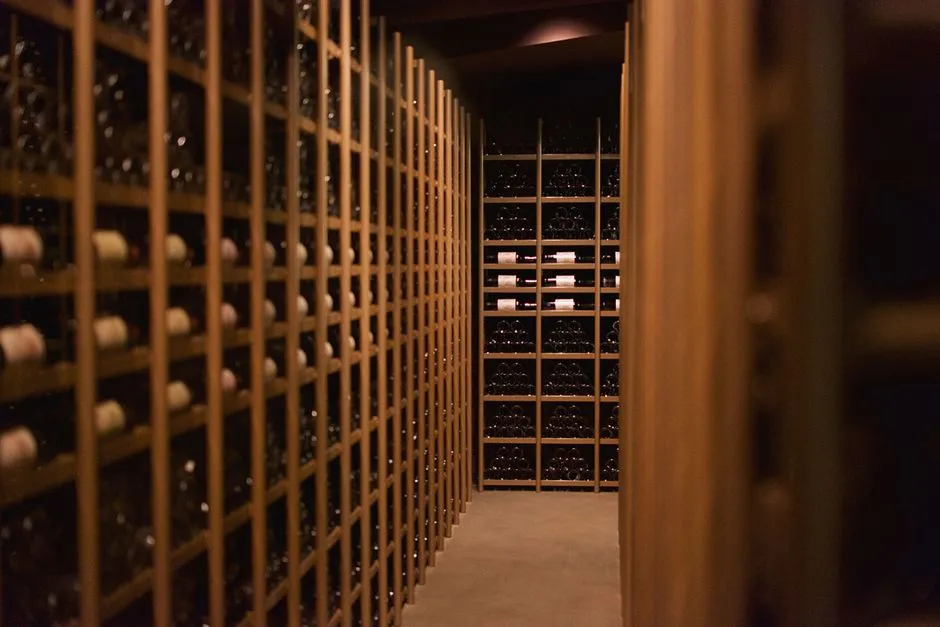
Wine professionals optimize for four things: temperature, temperature stability, humidity, and vibration. Light is a fifth, but in a windowless storage unit it is largely solved by default. Each variable matters differently across the lifespan of a bottle, and a facility that nails all four is doing meaningfully more work than one that simply runs cold.
Temperature target is conventionally 55°F, with a tolerance of plus or minus 2-3°F over the year. The target is not magic — bottles aged at 58°F will mature slightly faster than bottles at 52°F, and either is fine. What is not fine is variability. A bottle that swings from 50°F in winter to 70°F in summer will age unpredictably, push and pull cork and headspace, and oxidize. Stability is the single most important variable.
Humidity target is 60-70% relative humidity. Below 50%, corks dry out and lose seal. Above 80%, you get mold growth that can damage labels and capsules without affecting wine quality, but the resale and visual hit is real. Properly humidified storage requires either a dedicated wine cellar HVAC unit (Whisperkool, Wine Guardian, etc.) or a well-tuned standard HVAC paired with a humidifier in a small enclosed zone.
Vibration is harder to measure but easy to feel. Bottles stored on or near rotating equipment, in high-traffic loading areas, or above subway tunnels will mature differently than bottles in a quiet vault. Reputable wine storage operations use isolated rooms with no large mechanical equipment in the wine zone.
How a wine-grade storage unit differs from a climate-controlled unit
A standard climate-controlled unit holds 65-78°F at 45-55% RH. That is fine for furniture and electronics; it is not fine for wine. The difference is meaningful enough that wine-grade storage is usually built as a separate zone within a larger facility, with its own HVAC, monitoring, and access protocol. Some operations run dedicated wine vaults that are leased by the case lot rather than the cubic foot.
Costs reflect this. A climate-controlled 5x10 in most US metros runs $120-200/month. A comparable wine vault may run $250-450/month for the same physical footprint, with the price difference covering the tighter HVAC spec, monitoring, and dedicated zone construction. For a serious cellar, this is a fraction of the bottle value.
Storage protocol
- Bottles on their sides — keeps cork hydrated from the wine side.
- Original wood cases when possible — better airflow, better resale.
- Indexed inventory — the moment your collection passes 200 bottles, you need a spreadsheet or a wine app.
- Annual inspection — pull a representative bottle once a year and look for ullage, weep, or label damage.
- Insurance — most homeowner policies cap collectible-wine coverage at $500-1000. A separate wine policy or rider is usually worth it past 100 bottles.
When to consider a private cellar instead
For collections under 100 bottles, a household wine fridge or basement closet with an EuroCave-class unit is usually fine and cheaper over five years than commercial storage. For collections over 500 bottles, the math flips: a commercial wine vault gives you better climate, better security, better insurance options, and removes a 2,000-pound liability from your house. The middle range is judgment.
Choosing a facility
Ask for the wine zone temperature spec, the humidity target, the monitoring system, the alerting policy, the on-site team's wine training, and whether they offer a viewing room or extraction area. Ask whether the unit is exclusively yours or shared with other collectors, and what the access protocol is. The serious operations will walk you through all of it; the casual ones will deflect.
Find the right facility
Ready to put this guide to work? Browse storage by category or find facilities in your state.