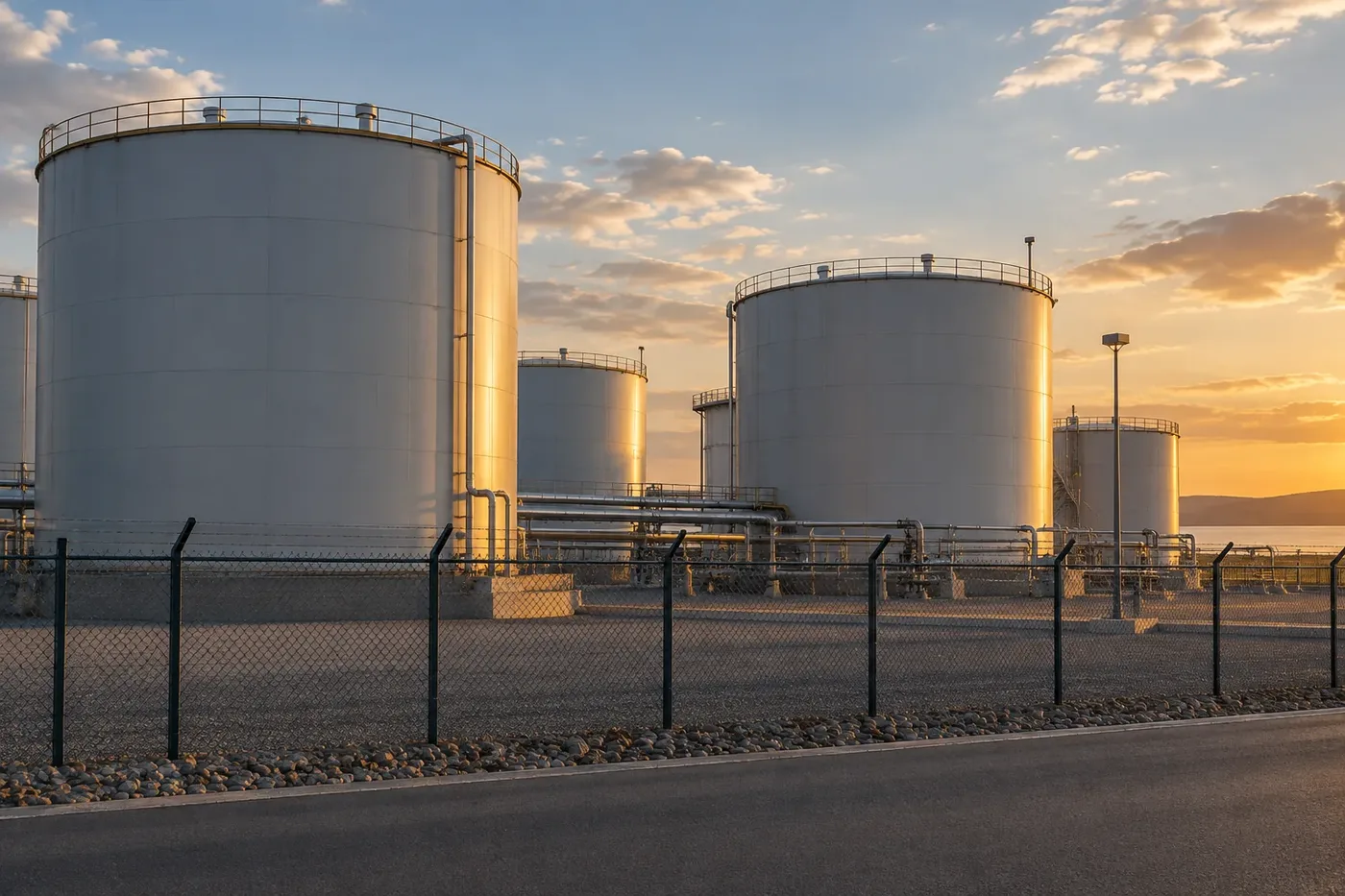
Bulk & Tank Storage
Above-ground bulk storage for fuels, water, and materials. Above-ground tanks for water, fuel, agricultural inputs, and industrial liquids. Includes containment, gauging, and scheduled delivery coordination.
What good bulk & tank storage looks like
The phrase “bulk & tank storage” shows up on a lot of facility websites — but the actual delivery varies wildly. A facility that lists this category may have a single dedicated unit type, a couple of converted bays, or a purpose-built section with its own HVAC zone, monitoring system, and access controls. The differences matter because the contents you're storing have specific tolerances. Bulk and tank storage covers above-ground tanks for water, fuel, agricultural inputs, and industrial liquids. Containment, gauging, and scheduled delivery coordination matter as much as the tank itself. Local fire and environmental codes shape which products are allowed where.
Climate & physical spec
| Parameter | Target | Tolerance |
|---|---|---|
| Tank Capacity | 500-12,000 gal | Single-wall or double-wall |
| Containment | Secondary 110% | Per EPA / local code |
| Gauging | Float / radar level | Continuous |
| Compliance | SPCC plan if >1,320 gal | EPA 40 CFR 112 |
| Delivery | Scheduled access, tanker entry | Permitted carriers |
Unit sizes & typical pricing
Pricing varies by metro and amenity load. The table below reflects the typical starting-rate range across Firmware Vault-verified facilities for this category. Expect a 15-40% premium versus a standard drive-up unit of the same footprint, reflecting HVAC, monitoring, and dedicated staffing.
| Size | Best for | National range / month |
|---|---|---|
| 500 gal | Small ag / hobby fuel | $45-90 / mo |
| 1,000 gal | Generator / equipment | $80-160 / mo |
| 2,500 gal | Farm bulk fuel | $150-280 / mo |
| 6,000 gal | Commercial reserve | $320-540 / mo |
| 12,000 gal | Industrial bulk | $580-1,100 / mo |
What to ask before you reserve
- Is the facility permitted for the substance you're storing?
- What is the secondary containment capacity and inspection schedule?
- Is gauging continuous, with alerting on level changes?
- Are SPCC / SWPPP plans on file with the facility?
- What is the access window for tanker delivery / pickup?
Move-in checklist
- SDS sheets on file with the facility.
- Annual containment inspection documented.
- Quarterly gauging accuracy check.
- Fire extinguisher class matched to substance.
- Spill response plan posted at the tank.
Verified Bulk & Tank Storage facilities
Bulk & Tank Storage by state
Browse the bulk & tank storage roster in each state. Each state page lists every facility we've verified for this category, with city-level breakdowns.