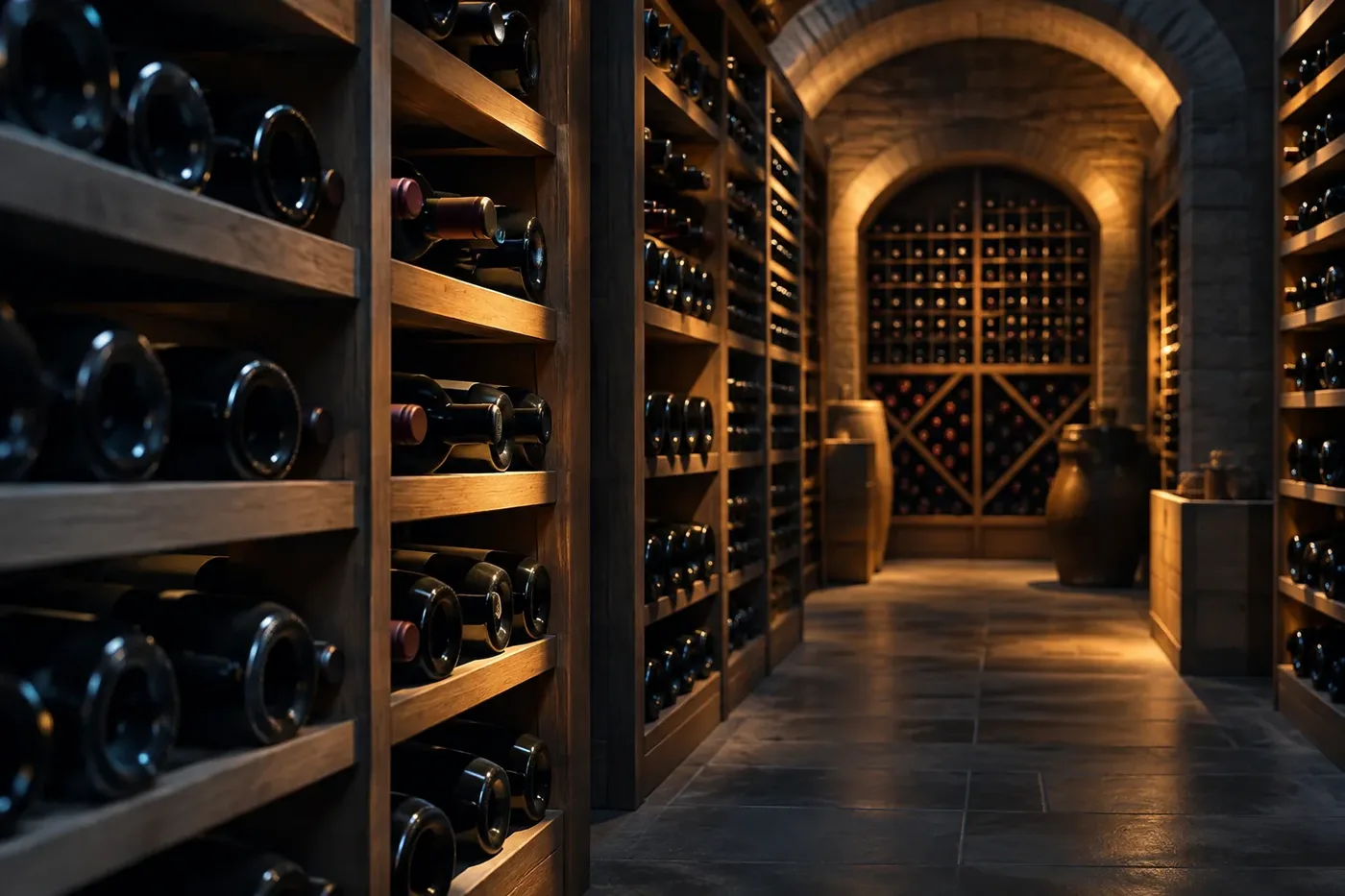
Wine Storage
Climate-stable cellaring for serious collectors. Temperature- and humidity-controlled environments engineered to mimic underground wine cellars. Typically held at 55-58°F with 60-70% relative humidity, with low-vibration construction and UV-filtered lighting.
What good wine storage looks like
The phrase “wine storage” shows up on a lot of facility websites — but the actual delivery varies wildly. A facility that lists this category may have a single dedicated unit type, a couple of converted bays, or a purpose-built section with its own HVAC zone, monitoring system, and access controls. The differences matter because the contents you're storing have specific tolerances. Wine storage is the canonical example of a specialty category where the spec genuinely matters. A bottle aged for 15 years spends roughly 5,500 days in the dark, and any one of them can compromise the bottle. Look for dedicated zones, not converted general-purpose units.
Climate & physical spec
| Parameter | Target | Tolerance |
|---|---|---|
| Temperature | 55-58°F | ±2-3°F over 12 months |
| Relative Humidity | 60-70% | ±10% |
| Vibration | Isolated room, no rotating gear nearby | Quiet zone |
| Light | Dark, no direct lighting on bottles | UV-filtered if any |
| HVAC | Wine-grade unit (Whisperkool / Wine Guardian or equiv.) | Continuous monitoring |
Unit sizes & typical pricing
Pricing varies by metro and amenity load. The table below reflects the typical starting-rate range across Firmware Vault-verified facilities for this category. Expect a 15-40% premium versus a standard drive-up unit of the same footprint, reflecting HVAC, monitoring, and dedicated staffing.
| Size | Best for | National range / month |
|---|---|---|
| Locker | 50-200 bottles | $45-95 / mo |
| Half-bay | 500-1,000 bottles | $120-200 / mo |
| Full-bay | 1,500-3,000 bottles | $250-450 / mo |
| Vault | 5,000+ bottles | $600-1,200 / mo |
| Case-lot | Per case | $3-6 / case / mo |
What to ask before you reserve
- Is the zone wine-grade (55-58°F, 60-70% RH) or just standard climate-controlled (65-78°F)?
- Is there a dedicated wine HVAC unit, or is it shared with the general climate zone?
- Are bottles stored on isolated racks away from rotating equipment?
- Is access by appointment, keypad, or 24/7? Most serious cellars use appointment-only.
- Can you receive shipments to the facility, with signature on file?
Move-in checklist
- Bottles on their sides — keeps the cork hydrated from the wine side.
- Original wood cases when possible — better airflow and better resale.
- Indexed inventory — past 200 bottles, you need a spreadsheet or wine app.
- Climate logs reviewed quarterly with the facility manager.
- Insurance rider for collection value — most facility policies cap low.
Verified Wine Storage facilities
Wine Storage by state
Browse the wine storage roster in each state. Each state page lists every facility we've verified for this category, with city-level breakdowns.